
Retro Racing
RaketspelRacing
4.361.00 Reviews
- Version
- 1.10.0
- Installs
- 100.00K
- Age Rating
- Everyone
Screenshots
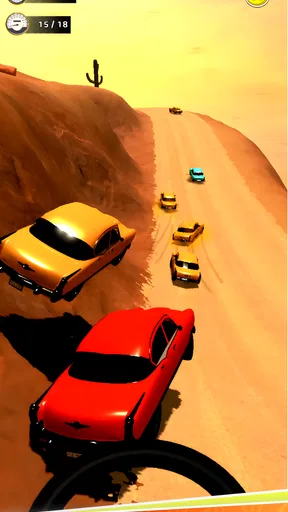
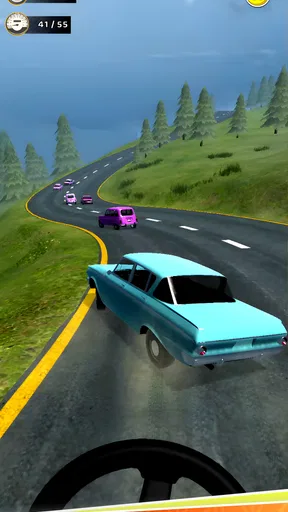
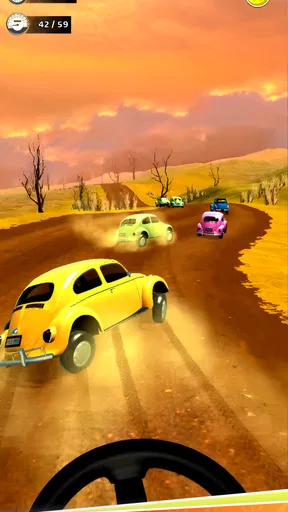
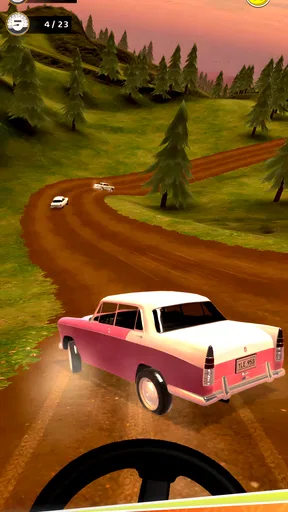
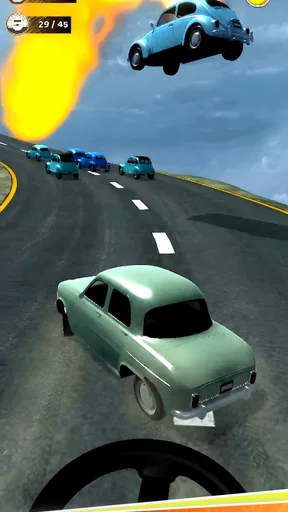
Our Review of Retro Racing
 Analysis by Appyee
Retro Racing is the kind of Android racing game I reach for when I want a quick driving session without turning my phone sideways. Developed by Raketspel, it is built around portrait play and one-handed control, which immediately gives it a different feel from the usual landscape racing games. I can keep the phone upright, use my thumb, and start a race without preparing for a long session. That simple setup is the game’s strongest identity.
It is a free racing game for everyone, with a retro presentation suggested by its short store description and a clear focus on accessible play. The current version is 1.10.0, and it runs on Android 9 or later. The listing shows an average rating of 4.3 from around 1.9 thousand ratings, with more than 100 thousand installs, so it has already attracted a modest audience rather than appearing as an untested curiosity.
My overall impression is positive, but not unreserved. Its best idea is not simply “old-fashioned racing”; it is making a racing game fit naturally into the way people actually hold a phone. That makes it useful for short breaks, queues, and casual play. At the same time, anyone looking for a deep simulation, a large competitive ecosystem, or an obviously transparent spending model should approach it with more caution.
How the portrait format changes the racing experience
The portrait layout matters more than it may sound. In most mobile racers, the landscape orientation already tells me that I am entering a more involved session. I need both hands, the display occupies more of my attention, and the game feels closer to a console-style experience. Retro Racing takes the opposite route. Keeping the phone upright makes it easier to play discreetly and quickly, especially when I am standing or have only one hand available.
That convenience also changes how I judge the controls. A one-handed racer cannot demand the same kind of precision as a full-screen driving game with several buttons, camera options, braking controls, and a detailed interface. The portrait approach works best when the game communicates its intentions clearly and lets me react without searching around the screen. I found that the format encourages short attempts: start a race, concentrate for a little while, then put the phone away.
This is a useful distinction when comparing it with more elaborate alternatives in the racing category. Large 3D racers usually win on visual spectacle, vehicle variety, and the feeling of building a long-term garage. They are better choices when I want a substantial evening game. Retro Racing is more appealing when convenience matters more than scale. It is closer to a compact arcade habit than a replacement for a major racing title.
A realistic everyday use case
Imagine having ten minutes before an appointment. A landscape racer may feel like too much commitment, particularly if its menus, loading sequence, or progression screen takes time before the actual driving begins. A portrait game can fit that gap more comfortably. I can hold the phone in one hand, play while seated, and stop after a short run without feeling that I have abandoned a lengthy event midway.
The same advantage applies during a commute, although I would only play when safely stationary and able to pay attention to my surroundings. This is not a game I would choose because I want to disappear into a detailed racing world. I would choose it because the barrier between thinking “I have a spare moment” and actually driving is low.
There is a trade-off here. One-handed play is convenient, but it can also make a race feel less physically engaging than a game that uses the whole screen and both hands. Players who enjoy tilting a phone, managing several controls, or tuning a car may find the portrait approach too restrained. That is not a flaw in the concept; it is a sign that the game is designed for a narrower kind of racing session.
What the retro angle does well
The retro identity gives the game a clear mood instead of trying to compete directly with every modern racing release. I generally prefer a focused visual and mechanical direction to a game that piles on features without a strong personality. Here, the appeal comes from quick driving and an old-school arcade impression rather than from pretending to be a complete motorsport package.
That focus may also help new players. A racing game aimed at everyone should be easy to understand at first contact, and a compact portrait design is less intimidating than a screen filled with gauges and upgrade menus. I would recommend it to someone who likes the idea of racing games but does not want to learn a complicated control scheme before having fun.
Still, “retro” should not be interpreted as a promise of limitless depth. Players should not install it expecting the breadth of a full racing simulator or the extensive long-term systems found in larger free-to-play racers. Its value depends on whether a concise arcade experience is enough for you.
Progress, pressure, and the cost of continuing
Retro Racing is free to download, which makes trying it straightforward. The important spending detail is that its in-app purchases range from $1.99 to $29.99 per item. That range is worth noticing before I settle into a long-term routine, because a free entry point and a completely cost-free experience are not the same thing.
I am comfortable with optional purchases when the basic game remains enjoyable without them and when the player can understand what is being bought before paying. With this title, I would make that decision gradually rather than assuming that every useful improvement is available at no cost. I would first play enough to decide whether the portrait racing itself holds my attention, then inspect each purchase carefully instead of buying impulsively after a difficult race.
The sensible rule is simple: treat the free version as a trial of the driving, not as a guarantee that every later convenience will remain free. That approach protects the casual player from spending merely because progress slows or a tempting item appears at the right moment. It also gives the game a fair chance on its actual merits.
How pressure can affect a short-session game
Short games can create a surprisingly strong urge to try “one more race.” Because a session is easy to begin, a disappointing result does not feel expensive in time. I may immediately restart, hoping to improve the next attempt. That loop can be satisfying, but it can also make purchase prompts feel more persuasive if they appear near a moment of frustration.
My advice is to separate two questions: am I enjoying the driving, and am I trying to remove an obstacle? If the answer to the first question is no, spending will not fix the underlying problem. If the answer is yes, I would still wait until I understand whether the purchase adds lasting value or only makes a single part of progression more comfortable.
This is one of the less obvious considerations with a portrait racer. Because the game fits into tiny gaps, it can become a repeated habit without feeling like a major gaming session. That makes a spending boundary useful. I would decide in advance whether I am happy to keep the experience entirely free, or whether I am willing to pay for a specific item after seeing how the game behaves over time.
Who will enjoy the progression most
The best match is a player who enjoys repetition with small improvements: better timing, cleaner decisions, and the satisfaction of making another attempt. The format suits people who like arcade racing but do not need an elaborate career mode to justify opening a game.
I would be less enthusiastic for someone who needs a clearly documented progression structure before committing. If you want to know exactly how every upgrade works, how every competitive rule is enforced, or how purchases affect long-term success, you should inspect the in-game explanations carefully before spending. That is not a criticism of the driving concept; it is a practical warning about choosing a free game responsibly.
Fairness when spending enters the picture
Fairness is the question I would ask before recommending any free racing game beyond a few casual sessions. A purchase range reaching $29.99 per item tells me that spending can be a meaningful part of the product, but the price range alone does not establish whether purchases affect competition, unlock convenience, provide cosmetic items, or simply support the developer. I would not claim more than that.
For that reason, I judge Retro Racing in two stages. First, I ask whether the unpurchased driving experience is enjoyable enough to stand on its own. Second, I look at the exact wording and consequences of any item before deciding whether it changes the balance of a race. If a purchase appears to offer a direct advantage, I would be especially careful about treating paid progress as optional rather than necessary.
Players who only want personal bests and private short sessions may care less about this issue. In that setting, paying for convenience can be a personal choice. Players who compare results with others, however, need a clearer understanding of what separates skill from spending. I would not assume that every result is equally comparable until I know how the game handles paid advantages.
Why the comparison with larger racers matters
Big racing games often make their economic structure visible through garages, currencies, car classes, event tickets, and upgrade paths. That can be overwhelming, but it also gives players more context for understanding what they are buying. A compact retro racer may feel cleaner because it avoids that visual clutter, yet the smaller presentation can leave the player with fewer clues about how purchases influence the experience.
That is where a larger alternative may be better for a particular user. If you want a detailed explanation of vehicle development or a broad competitive framework, choose a game built around those systems. If you want a fast portrait session and prefer not to rotate the phone, Retro Racing has a much more convincing reason to exist.
My practical recommendation is to avoid spending during the first few sessions. Learn the controls, see whether the races remain enjoyable after the initial novelty, and notice whether progress feels satisfying without assistance. This is a better test than judging the game from its retro look alone.
Questions I would answer before installing
Before installing, I’d think about when I actually want to play: a spare minute with the phone upright calls for a different kind of racer than a planned, two-handed gaming session. I’d also check that my Android device meets the game’s minimum requirement and decide whether I’m comfortable trying a free game that offers paid items. Those choices make it easier to judge whether its compact style fits me.
Is it suitable for a quick one-handed session?
Yes, that is the clearest reason to try it. The game is designed for portrait play, so it suits moments when I want to keep the phone upright and use one hand. It is especially appealing for short breaks and casual attempts rather than long, immersive sessions.
Will it replace a full racing game?
No, I would not position it that way. Its appeal is convenience and a retro arcade direction, not the depth associated with large racing releases. If you want extensive vehicle management, realistic driving, or a substantial career structure, a more ambitious alternative will probably suit you better.
Can I play without paying?
You can start for free, and I would recommend doing exactly that before considering any purchase. The game includes in-app items priced from $1.99 to $29.99, so players should review what each item does and decide whether it improves the experience enough to justify the cost. I would never buy simply because a difficult race created a moment of frustration.
Is it appropriate for younger players?
The content rating is Everyone, which makes it broadly suitable from an age-rating perspective. Parents should still remember that the game contains in-app purchases. If a child uses the device, purchase controls and supervision remain sensible, particularly because the game is free to begin but includes paid items.
Will an older Android phone run it?
The minimum operating system is Android 9, so compatibility depends on the phone meeting that requirement. I would check the device version before installing. Beyond that, I would judge the game on the actual screen and control comfort of the phone, since portrait play is central to how it feels.
My final view on trust and value
After looking at the game as both a racer and a free mobile product, I see a focused experience with a convincing practical advantage. Raketspel has chosen a format that makes sense for quick play: portrait orientation, one-handed handling, and a retro racing identity that does not require the commitment of a large landscape title.
The limitations are equally important. This is not my first recommendation for players who want simulation depth, extensive customization, or a competitive environment where the effect of purchases is completely obvious at a glance. The presence of in-app purchases from $1.99 to $29.99 means I would keep spending deliberate and separate from the excitement of trying to beat a difficult result.
My recommendation is therefore conditional but genuine. Install it if you want a compact racing game that respects the way a phone is normally held and you enjoy replaying short arcade challenges. Start free, learn whether the core driving keeps you interested, and only then consider paying for anything. Skip it if your idea of racing requires a large screen, two-handed precision, or a deep, fully explained progression system.
For the right player, Retro Racing is valuable because it removes friction without pretending to be a complete racing simulator. That honesty of purpose is what makes it worth trying. I would keep it as a convenient pick-up-and-play racer, while remaining careful about purchases and realistic about the amount of depth a portrait game is likely to provide.
Verdict
Strengths of Retro Racing
- Simple controls make it easy to start racing immediately.
- Retro visuals and sound create a charming arcade atmosphere.
- Short races are ideal for quick gaming sessions.
- Multiple cars and tracks add variety to the experience.
- Offline play makes it convenient when no internet is available.
Limitations of Retro Racing
- Some races may feel repetitive after extended play.
- The pixel-art style may not appeal to every player.
- Progression can feel slow without repeated races.
- Limited customization reduces long-term personalization.
- Ads or in-app purchases may interrupt the gameplay experience.
Other Releases by Raketspel
View All
Two Birds
Word4.2
Similar Picks in This Category
View All
Hill Climb Racing
Fingersoft4.3

Dr. Driving
SUD Inc.4.2

Traffic Rider
skgames4.5

Asphalt 8 - Car Racing Game
Gameloft SE4.6

Race Master 3D: Car Racing
Beresnev Games4.6

Extreme Car Driving Simulator
AxesInMotion Racing4.3
Frequently Asked Questions
What is Retro Racing, and what kind of gameplay does it offer?
Retro Racing is an arcade-style driving game built around fast races, simple controls, and a nostalgic visual style inspired by classic racing titles. Instead of focusing on realistic simulation, it emphasizes quick reactions, tight cornering, overtaking, and learning each track. It is designed for short play sessions, making it suitable for casual players as well as fans of old-school racing games.
Is Retro Racing free to download and play?
Retro Racing can generally be downloaded without an upfront purchase, although availability and pricing may vary depending on whether you use Android or iOS. The game may include optional advertisements or in-app purchases, so it is worth checking the store listing before installing. Players should also review the purchase settings if children will be using the device.
Does Retro Racing work without an internet connection?
One of the convenient aspects of Retro Racing is that its core racing experience is usually playable offline after installation. This makes it useful for travel, commuting, or situations where mobile data is unavailable. However, an internet connection may still be required for advertisements, store features, updates, cloud services, or other online-related functions included in the version available on your device.
What controls and difficulty should new players expect?
Retro Racing typically uses straightforward touch controls, allowing players to steer, accelerate, brake, or manage movement with minimal setup. The controls are easy to understand, but mastering high-speed turns and avoiding collisions takes practice. New players may find the early races accessible, while later tracks or faster opponents can require better timing, route knowledge, and more careful use of the available controls.
Is Retro Racing suitable for children and older devices?
Retro Racing is generally approachable for a wide range of players because its presentation is colorful, its rules are easy to understand, and it does not depend on complicated simulation mechanics. Performance should be acceptable on many modern Android and iOS devices, although older phones may experience slower loading or reduced smoothness. Parents should check the current age rating, advertising, and in-app purchase information before downloading.
Play our best games!


